


Anton Serdjukov breaks down Tallinn Fringe’s visual identity, shareable promo strategies, and why face-to-face connection still fills venue seats.
As the Tallinn Fringe Festival cements its reputation as a vital launching pad for independent acts, its visual language plays a key role in connecting performers with audiences. Overseeing this creative direction is Anton Serdjukov, who manages the festival’s design, photography, and video content.
We sat down with Anton to discuss the strategy behind Fringe’s changing aesthetic, practical marketing insights for acts performing at venues like Heldeke!, and why direct human interaction remains the ultimate promotional engine.
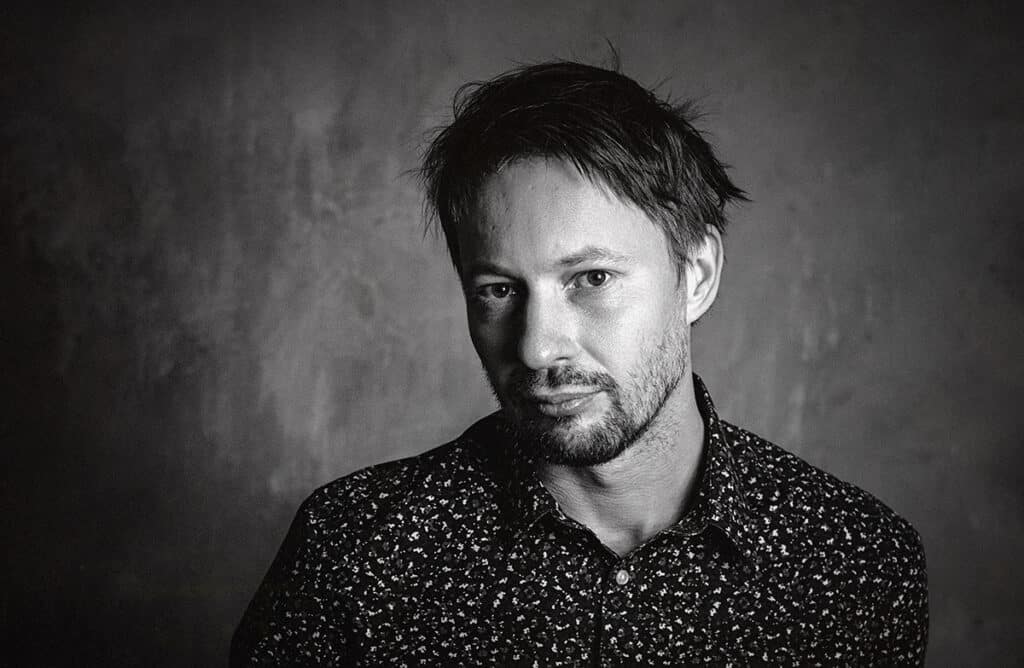
Arashk: Could you introduce yourself and elaborate on your role within Tallinn Fringe, particularly regarding its visual direction?
Anton: I oversee the festival’s complete visual identity, working across graphic design, photography, and video content. While our broad aesthetic is decided collaboratively with the team, my job is executing those ideas into a cohesive visual package. Over the seasons, I’ve established a design framework that allows us to build upon a proven foundation each year rather than starting from scratch.
Arashk: The festival adopts a new primary color palette for every edition. What drives this creative choice?
Anton: It allows the brand to evolve dynamically without sacrificing core brand identity. By shifting the central color accent each edition, we signal a distinct new chapter while maintaining immediate recognition. Looking back, it also makes indexing our archives by color far more intuitive than simply categorizing them by year.
Arashk: How do you define Tallinn Fringe, and what significance does it hold for you personally?
Anton: At its core, Tallinn Fringe is an essential platform dedicated to professional artists. A festival cannot exist without its creators—you can gather a crowd, but without performers, there is no show. Beyond attracting an audience, the festival serves as a vital playground for professional creators to step outside their routine disciplines, test unreleased material, and truly experiment.
Arashk: What primary guidance would you offer to artists regarding their branding and promotional strategy?
Anton: The single objective for any participating act must be drawing an audience to their show. That requires three key elements: a compelling production, striking visual assets, and a well-considered promotional strategy. The process starts with assessing whether you are truly prepared to commit to the marketing effort, and then going all-in to maximize your show’s reach.
Arashk: When an artist’s established personal brand clashes with the festival’s seasonal color scheme, how should they handle it?
Anton: There is always room for flexibility. Performers can integrate the seasonal branding into their existing artwork in subtle ways, or simply add the official logo to signal their inclusion in the program. Co-branding benefits everyone involved, but if an artist’s aesthetic is strictly minimalist and adding a logo disrupts their vision, we certainly won’t hold it against them.
Arashk: If a performer lacks graphic design skills, what step should they take?
Anton: It’s completely normal to excel on stage while lacking design skills. I recommend three paths: learn basic design fundamentals if time permits, hire a professional graphic designer, or attend our artist workshops. Participating in our educational workshops is by far the most practical way for artists to learn how to manage their branding and marketing. We also host templates and style guidelines on our website. Direct consultations with our team should be a final resort after exploring those workshops.
Arashk: Which promotional avenues do you consider most effective for independent acts on a budget?
Anton: Avoid scattering your resources across too many channels. Rather than dividing a small budget between minimal digital ads, a few stickers, and sporadic social media posts, focus your energy on one well-timed push. For instance, street flyering works best immediately prior to a show, whereas digital ads require lead time. Beyond digital channels, street performances in costume or pop-up teasers in public spaces remain incredibly powerful ways to capture immediate attention.
Arashk: What principles should artists keep in mind for short-form social media videos?
Anton: Avoid trying to squeeze every piece of information into a single post. Deliver details incrementally. Publishing five distinct posts—each highlighting a single unique element of the show, is significantly easier for an audience to process than repeating one dense post packed with text.
Arashk: For performers operating on near-zero budgets, where should they direct their energy?
Anton: Grassroots networking and direct human connection offer the highest return on investment. Partner with performers staging similar productions and ask for a quick 30-second pitch at the end of their set to reach a pre-warmed audience. For touring acts without a local fanbase, posters alone rarely drive ticket sales. Genuine face-to-face interaction—engaging directly with people on the street or chatting with prospective attendees in local bars—remains the most reliable promotional tool available.
Arashk: What are the most common promotional oversights you observe among festival participants?
Anton: The biggest oversight is simply missing out on participating in the festival altogether. From a technical standpoint, a frequent mistake is blindly relying on automated ad spend on platforms like Meta or Google. Without precise audience targeting, a budget can easily be wasted on irrelevant impressions.
Arashk: What closing thoughts would you like to leave with the performers and prospective festivalgoers?
Anton: I want to extend a warm welcome to all the artists preparing to take the stage this season. We look forward to working alongside them throughout the event, and together, we are set to build a fantastic audience for this year’s program.
This interview was originally published on the Tallinn Fringe Festival website.


