


Kaisa Ling is a prominent Estonian blues vocalist, broadcaster, literary scholar, and translator. As the frontwoman of Kaisa Ling Thing, a vaudeville-blues group founded in 2017, she stands at the center of Tallinn’s cabaret, clowning, and independent performance art movements.
Alongside her broadcasting work for Estonian Public Broadcasting (ERR), Ling acts as the Artists’ Ambassador for the Tallinn Fringe Festival. In this interview, I sat down with her to explore the mechanics of uncurated arts festivals, the mindset needed to thrive without safety nets, and how self-directed artists can turn chaos into opportunity.
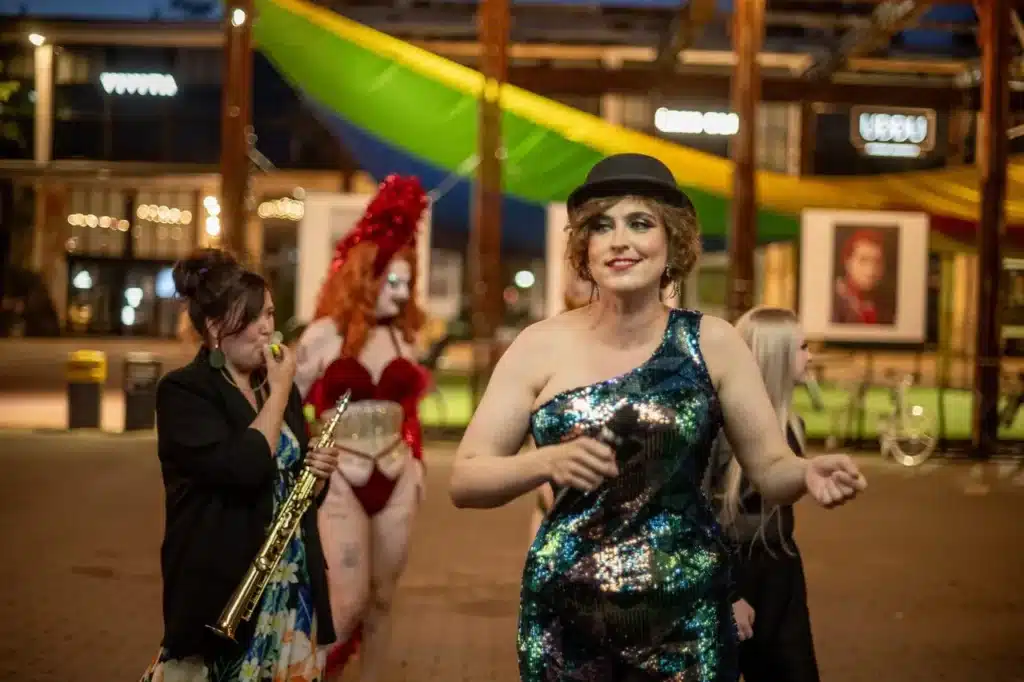
Arashk Azizi: How do you view the core essence of Fringe?
Kaisa Ling: Fringe is an intense, real-world masterclass in self-direction. My first run at Edinburgh Fringe transformed how I work, the sheer hustle of flyering, daily shows, and self-promotion doubled my sharpest skills as a performer. Beyond the workload, it’s the ultimate global exchange for artists to network, spot incredible talent, and build lasting creative partnerships.
Arashk: What is your role as Artists’ Ambassador, and when should performers reach out?
Kaisa: Externally, I advocate for performers by liaising with venues, media, and audiences to foster better working conditions. Internally, I guide artists toward complete creative independence. Whether Fringe serves as your career launching pad, a testing ground, or a reality check that reveals a different path, I’m here to support artists at any stage, even before they know exactly what they need.
Arashk: What is the most frequent pitfall for first-time Fringe performers?
Kaisa: Misunderstanding the sheer level of self-management required and expecting overnight fame. Without curators handling production, you become your own publicist, manager, venue coordinator, and accountant.
In Estonia, this transition is particularly profound. Our creative heritage stems from an institutional, state-led system where artist trajectories were dictated from above. Adapting to an uncurated festival requires a total mindset shift toward operating as an autonomous, self-managed entrepreneur in an open market.
Arashk: How can artists effectively manage that level of operational pressure?
Kaisa: Start small and keep your footprint manageable. Book a focused, three-night run, Thursday through Saturday, in an intimate room like Heldeke!’s 30-to-60 seat space. Successfully delivering a compact run builds operational confidence and gives you a clear blueprint to scale up in future years with longer dates or larger teams.
Arashk: Who stands out as a success story from this circuit?
Kaisa: Look at character comedian Charlie Mulliner. Her performance at Heldeke! during last year’s Tallinn Fringe was brilliant. She built on that momentum to win awards at Adelaide Fringe and launch major international tours. The Fringe ecosystem has historically propelled diverse talent into global orbit, from theatre icons like Miriam Margolyes to modern stand-ups and screen actors.
Arashk: What key piece of advice would you leave for artists and audiences this year?
Kaisa: Keep stress in perspective, most pressure comes from within, so shift your mindset and focus on enjoyment. For audiences, avoid decision fatigue by taking chances on intimate, unusual venues. Most importantly, trust word of mouth. Talk to people in local cafes and venues; Fringe is a celebration of live human connection.


