

Before my first time experiencing a live show at Heldeke!, I’ll admit I had a pretty standard preconception of what burlesque was. I expected something mostly seductive, a flashy, glamorous display of skin, feathers, and old-school jazz tracks. But the moment the lights dimmed in that intimate Tallinn theater, everything shifted. What I thought would be merely a provocative show turned out to be a brilliant, living art form. There was a stunning amount of depth, storytelling, and deliberate parody at play. The performers weren’t just taking off clothes; they were commanding the room with sharp social commentary, fierce body positivity, and an incredible sense of humor. I walked out realizing that burlesque isn’t about passive viewing, it’s an empowering, theatrical conversation.
From Parody to Pasties: A Brief History
That mixture of wit and subversion makes perfect sense when you look at where the art form actually comes from. The word burlesque is derived from the Italian burla, meaning a joke or a mockery. When it first exploded in Victorian-era London and sailed over to America in the 1860s, it wasn’t centered around the striptease. It was about taking the powerful down a peg.
Early burlesque was a working-class variety show driven by fierce, funny women who used parody to mock rigid social hierarchies, upper-class hypocrisy, and stuffy high-brow operas. They wore revealing tights as a deliberate critique of Victorian prudishness, blending sharp-witted political satire with physical spectacle.
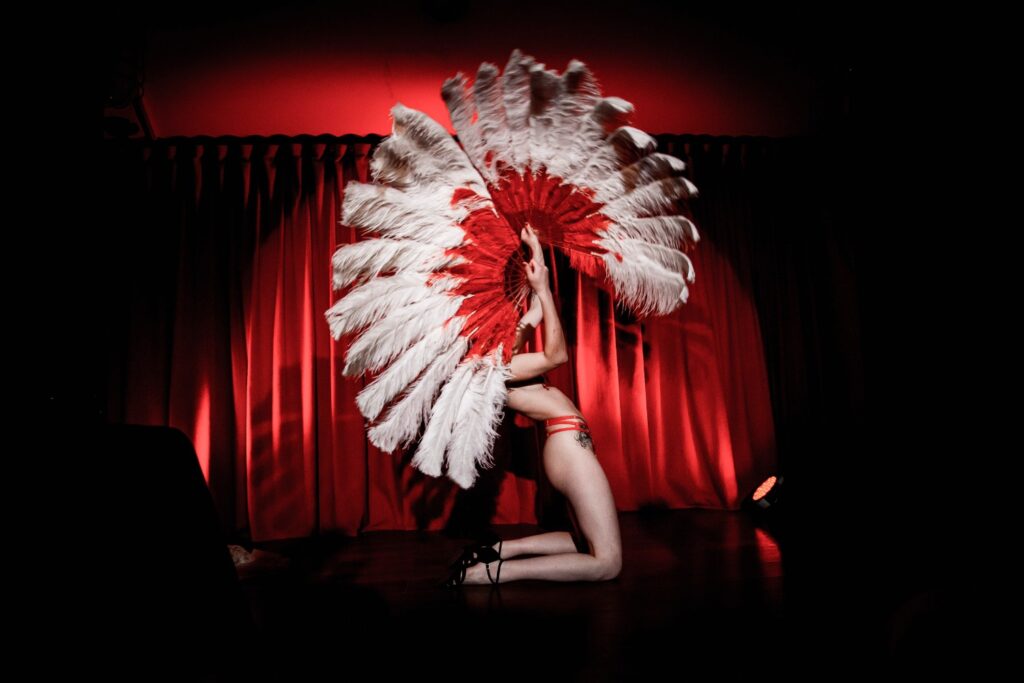
As the 20th century rolled around, competition from the birth of cinema forced the stage to adapt. The focus gradually shifted from spoken wordplay to the physical “tease.” By the 1920s and 30s, the golden age of American burlesque was born, cementing the iconic imagery we know today: elaborate feather fan dances, tasseled pasties, and glamorous velvet gowns.
When the genre eventually lost its theatrical humor and grew increasingly explicit to compete with adult cinema, it faded into the underground by the 1970s. But you can’t keep a good rhinestone down. The 1990s gave birth to Neo-Burlesque, a global movement that stripped away the outdated historical rules. This modern wave recaptured the original, rebellious DNA of the art form, transforming it into an inclusive celebration of body liberation, queer culture, and beautifully subversive performance art.
The Dictations of Modern Burlesque
Walk into a show today, and you are just as likely to see a classic 1940s Hollywood starlet routine as you are a performer dressed as a giant alien eating a banana. Modern burlesque is split into a few beautifully fluid sub-genres:
- Classic Burlesque: Focused on vintage elegance, dramatic glove removals, luxury fabrics, and the timeless, slow-tempo art of the reveal.
- Neo-Burlesque: The wild child of the family. It pulls in elements of punk rock, pop culture, theater, and direct political activism.
- Boylesque: Burlesque featuring male-identifying or masculine-presenting performers, turning traditional ideas of the gendered gaze on its head.
- Gorelesque / Nerdlesque: Creative subcultures where performers pay homage to horror movies, sci-fi franchises, or comic books through a satirical lens.
The Glitter Reaches Estonia
For a long time, Estonia’s stage scene leaned heavily traditional. While cabaret had a historical foothold in glamorous Soviet-era hotel shows, underground burlesque as an empowering, community-driven art form didn’t truly establish its roots here until around 2010.
A dedicated collective of local performers, producers, and international imports, eventually coalescing into organizations like Burlesque Estonia, slowly began sowing the seeds of the scene. They had to introduce local audiences to a whole new concept: that burlesque isn’t a passive spectacle for a quiet room. It’s an interactive, high-energy dialogue where the audience is encouraged to cheer louder for a clever costume reveal or a hilarious facial expression than for bare skin.
Estonian burlesque quickly developed its own unique flavor, blending classic Nordic mystery with a cheeky, self-deprecating wit and a love for the delightfully bizarre.
Returning to the Source: Heldeke! in Kalamaja
If you want to feel the absolute epicenter of this glittering subculture, you have to head to Heldeke!
Tucked away in Kalamaja, Tallinn’s bohemian, historic neighborhood of wooden houses and creative hubs, Heldeke! is the perfect architectural match for the genre. It’s a custom-built vaudeville-style theater-bar with a distinct speakeasy vibe. The room is wonderfully intimate, featuring tiered theater seating, classic red stage curtains, and a bar boasting the largest whisky selection in the neighborhood (plus a working communal sauna in the back, because this is still Estonia, after all).
Heldeke! has turned burlesque into a true cultural staple in the capital. Their flagship burlesque weekends and festival showcases are a masterclass in the exact depth and parody that hooked me during my very first time in the crowd. The format is tightly produced yet wildly unpredictable, routinely pairing local powerhouses with visiting international stars who fly in specifically for the venue’s legendary atmosphere.
What makes the space truly special is how it completely shatters the stereotype of the reserved Estonian audience. The moment the host steps out, the room transforms into a safe, electric sanctuary where the crowd hoots, hollers, and stamps their feet in appreciation of the storytelling on stage. Burlesque was born to mock boundaries, celebrate the human body, and make people laugh until their ribs hurt—and under the warm glow of the Heldeke! stage lights, that rebellious, joyful spirit is fully alive.
Check out the upcoming events and make sure not to miss out on the future burlesque shows at Heldeke!


